

We are the children of the flood. All of us living today are descended from those who saw their lands drowned, civilisations crumble and populations scatter. Floods linger deep in our cultural memory, when an old world died in violence, and a new one was born.
—Gareth E. Rees, Sunken Lands: A Journey Through Flooded Kingdoms and Lost Worlds
Chapter 1
The North Sea churned along the Norfolk coast, a vast cauldron of slate-grey water whipped to a frenzy by the howling wind. An advancing wall of charcoal cloud shot through with lightning bolts smothered the last rays of early sunlight as gulls wheeled, fleeing inland, their cries lost in the rising wind.
The first droplets of rain fell on one lonely beach, the pattering sound intensifying as the deluge arrived, blurring the line between sea and sky.
Waves crashed against the shore of the ancient fens as the storm surge pushed relentlessly inland. It flooded the coastal marshes, swirling through strands of sea lavender and salt-marsh grass, uprooting the plants that held the dunes together. As each wave receded, it took with it another fistful of the land.
Eventually, the storm ebbed, and the rain slackened to a steady drizzle, revealing the extent of the damage.
The coastline had been reshaped. Where there had been dunes, there were now only jagged cuts into the land. The beach, usually a gentle slope, was now a chaos of debris and newly carved channels of water running back to the sea.
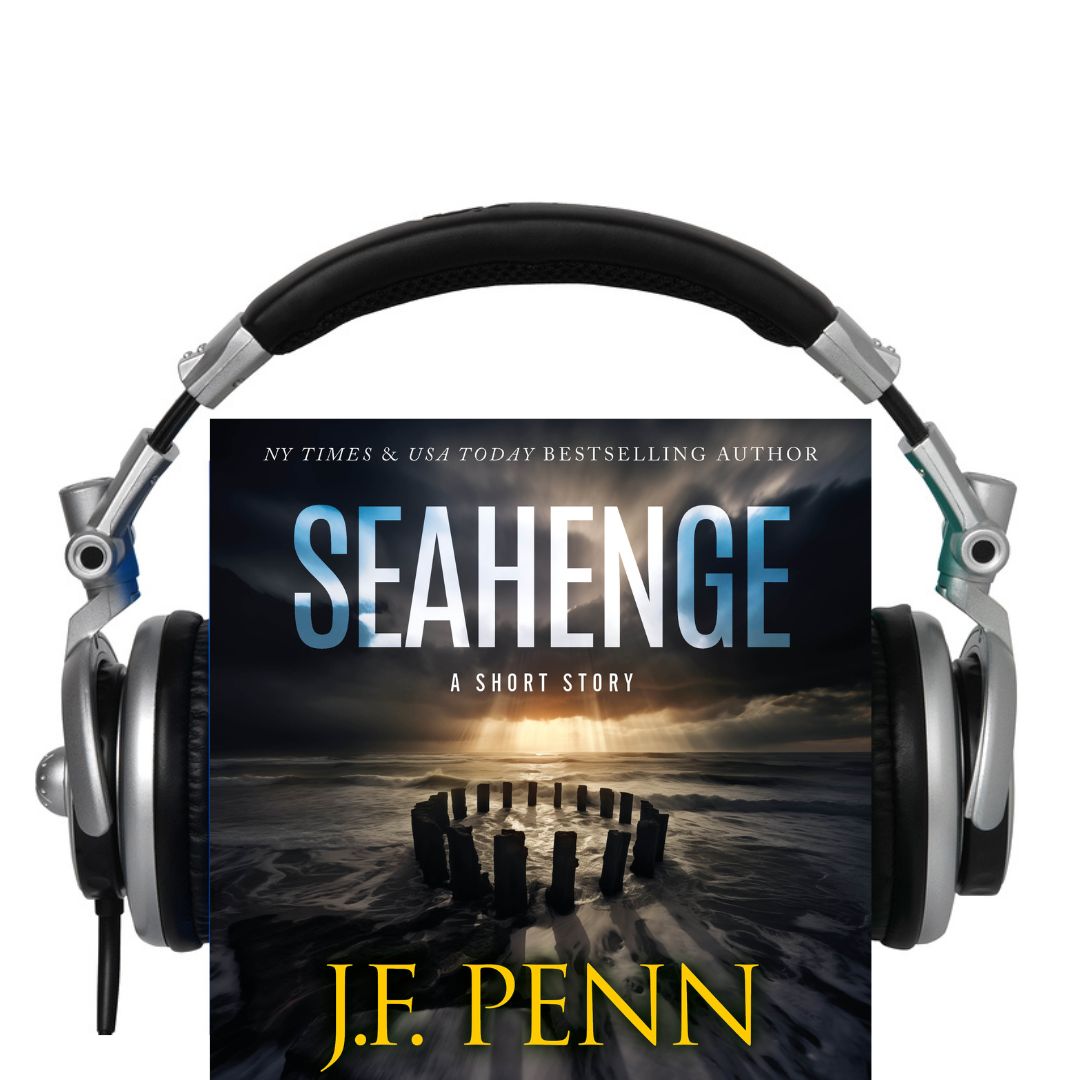
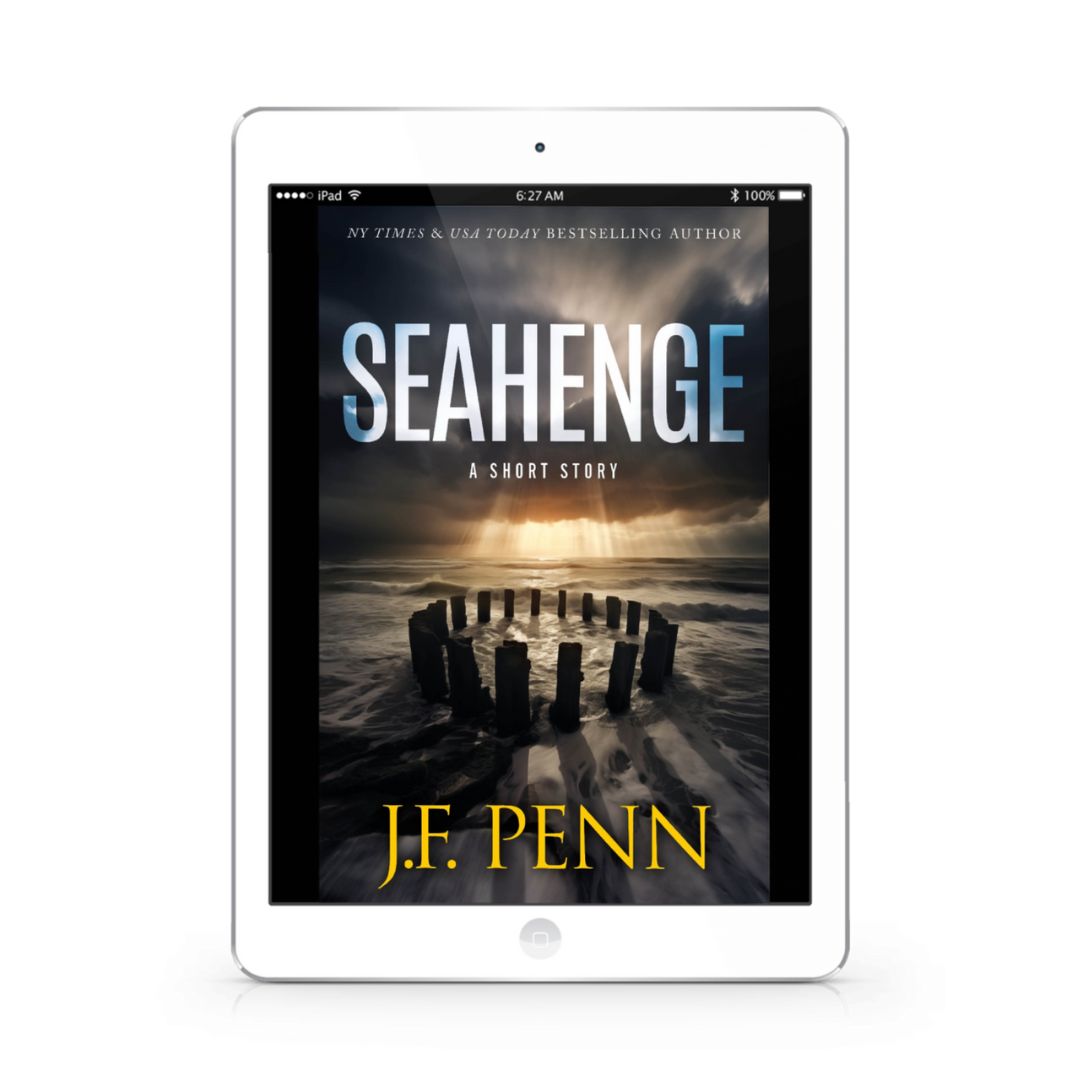
And there, emerging from the receding tide, a perfect circle of tall timber spars. The wood was dark, almost black, preserved by long immersion in peat and sand. The spars glistened in the weak morning light, still slick with sea water and strands of seaweed. As the light shifted, it cast shadows along the wood, illuminating marks of ancient tools and ritual symbols in a long-lost language.
At the centre of the circle, a massive tree stump stood inverted, its gnarled roots reaching for the sky, forming a central platform. In its twisted embrace lay the remains of something long forgotten.
A flock of gulls, returning now the storm had passed, wheeled overhead but did not approach. Their cries seemed muted, distant, as if they called across a vast gulf of time.
Chapter 2
The wind whipped strands of Dr Evelyn Price’s grey hair across her face as she stepped out of her Land Rover later that day. She pushed the errant strands into her beanie hat and rubbed her hands together against the cold as she looked down onto the beach.
The Norfolk coast stretched out before her with the aftermath of last night’s storm etched into the landscape, the dunes forever reshaped. But it was the perfect circle of dark wooden spars emerging from the shallow water on the beach that drew her attention.
It was clearly Neolithic — similar timber circles had been discovered from that time — but this was different. The inverted tree stump at its centre was unusual, but what lay upon it might be even more so. A tarpaulin covered the central section to protect what lay beneath, and she was keen to get down there to examine it.
The call had come a few hours ago from the local police requesting Evelyn’s team take over the investigation at this newly emerged site. While remains had been found, the initial police forensic assessment had determined them to be historic. Evelyn was Head of Maritime Archaeology at Historic England and although her team was presently engaged with a shipwreck in the Thames Estuary, she could already see that this site would take precedence.
Evelyn hurried down the dunes, her boots sinking into the wet sand as she made her way along the beach. It smelled of brine and the rot of sea creatures churned up and scattered across the shore. The cries of gulls pierced the air as they scavenged the wreckage.
As Evelyn approached the excavation site, she recognised Dr Marcus Holbrook, an archaeologist and director of a local museum. They had worked together in the past, and she appreciated his meticulous approach. A team of archaeological workers bustled around him, shoring up the newly emerged structure to protect it from the elements before the tide rose once more.
“Over here, Evelyn!” Marcus waved her over, his silver hair plastered to his forehead from sea spray, his windbreaker doing little to protect him from the elements.
Evelyn walked through the outer ring of staves. There were over fifty standing close together, forming a kind of enclosure within, and she noticed tool marks in the dark wood arranged in ritual patterns. Spirals, circles, horizontal marks, and zigzag lines. Perhaps a map of the heavens or prayers to an ancient sea god.
Marcus pointed to the tarpaulin-covered central stump. “It’s extraordinary. I’ve never seen anything like it.” He gestured to a set of stones, placed as steps next to the covered platform. “We have to move it soon or it’s going to disintegrate from exposure.”
He stood back, biting his lip in anticipation of her reaction. Evelyn had never seen the usually mild-mannered director so intensely excited by a discovery.
She used the stones to step up and carefully lifted one corner of the tarpaulin from around the gnarled edges of the ancient roots of the upturned tree.
The body, clearly a woman, was impossibly old, yet preserved in the peat, her skin leathery and darkened to a deep mahogany. She lay cradled by the root structure, cupped by the base of the ancient tree.
Dark, tangled strands of hair, matted with peat, clung to her scalp. The skin of her face was drawn tight, lips pulled back over what looked like sharpened teeth. Her hollowed eye sockets stared out from beneath what remained of a fragile brow, the skin stretched so thin it seemed barely more than a film over bone.
Her arms and torso were withered but whole, the sinew and skin preserved in the oxygen-starved environment, giving the body an almost waxen appearance. Faint tattoos or ritual markings were etched into her skin, the symbols barely visible on the peat-stained flesh.
Evelyn shifted slightly, leaning over to view more of the body — and gasped at what she saw.
The creature had no legs, but instead, a long powerful tail of smooth, leathery skin that tapered into a delicate fin with faint scales still visible. The tail curled in and out of the roots, as though the tree had grown around the body, holding it in a final embrace.
Evelyn frowned as she tried to make sense of it. Was this a hybrid sacrifice, with parts fused after death? Fake mermaids persisted in various cultures, with the most famous being P. T. Barnum’s Fiji mermaid, constructed from the torso and head of a monkey sewn onto the back half of a fish. Perhaps the Neolithic people who lived here had made such a creature to honour their sea god?
Evelyn stood on her tiptoes to see even closer, careful not to touch the wood or the remains, but desperate to make out whether the join was obvious. But the transition from human to fish was seamless, at least from what she could see.
She stepped back down onto the sand, her mind reeling.
Marcus couldn’t contain his excitement. “What do you think? Is it real?”
Evelyn took a deep breath of the chill, briny air and shook her head. “I don’t know, but we have to act fast to preserve the site and the remains. Only once it’s back in the lab under controlled conditions can we investigate any further.”
A wave crashed onto the wooden spars, sending a spray of saltwater over the site. “We don’t have much time. Let’s get to work.”
The next few hours were a blur of activity. Evelyn directed her team with practiced efficiency, setting up barriers to direct the tide around the site while they documented everything step by step.
One of the environmental archaeologists knelt in the sand, carefully extracting core samples from around the timbers and then sampling the posts themselves, meticulously scraping minute amounts of wood and sediment into labelled vials.
Evelyn turned to Marcus. “How deep do you think the posts go?”
Marcus shrugged. “Hard to say without ground-penetrating radar but given their height above ground and the preservation state, at least a meter, maybe more.”
“I agree.” She sighed. “It’s going to take too long to get them all out at once. We’ll have to do it in stages, as the tide allows.”
A buzz came from behind them as Samuel Chen, their resident tech expert, launched a drone with a high-resolution camera to map a detailed 3D model of the site.
Within minutes, Samuel called out with excitement. “Evelyn! You need to see this.”
Evelyn hurried over to check his laptop screen, where a preliminary model of the site rendered slowly. Samuel pointed to the marks on the timbers that she had noticed on first approaching the site. The camera angles highlighted them, and specialised filters enhanced the images even more.
“These patterns aren’t random. They’re a language of sorts. I’ll need to adapt my custom model, but perhaps we’ll be able to translate at least some of it.”
Evelyn grinned, sharing his excitement. Such a find made this site even more valuable. “Good catch. Make sure you get detailed scans of every timber, and we can examine them all further back at the lab.”
As she turned back to the central upturned tree, a gust of wind made her gasp with its intensity. Dark clouds gathered once more on the horizon.
“Weather’s turning!” she shouted to her team. “Let’s secure the remains as a priority and try to get at least one of those timber spars out. We’ll have to come back again tomorrow for the next batch.”
As the wind drove the dark clouds closer and closer, her team raced to protect the remains. Their specialist truck arrived with tanks designed to keep specimens in the damp conditions they were used to before the preservation process began. As it backed down the beach with its custom lift attached, Evelyn supervised her team as they prepared to move the remains.
They worked with painstaking care, using soft brushes to remove as much sand and debris as possible before applying a consolidant to stabilise the fragile flesh, but there was no easy way to remove it from the upturned roots.
Evelyn sighed. “We’re going to have to cut the wood closest to the body. It’s better to damage a little of the tree than risk the remains.”
One of her technicians carefully cut through several of the upturned roots with a small electric saw until the creature could be wrapped, ready for lifting.
Two team members supervised a specially designed cradle, custom-built for delicate remains, as it swung from the truck down to the creature. They attached it around the body and the entangled roots.
Evelyn could scarcely breathe as the team looked to her for the command to lift. She hated to disturb the archaeological scene, but they couldn’t leave the creature here. With the storm returning, it might be gone by morning or destroyed by the elements. They had to take the risk.
“On three,” she called out. “One… two… three!”
The cradle lifted. The creature rose from its rooted grave.
A sickening crack rang out.
The central tree stump split open, dark oily sediment seeping from its core. A fissure opened in the sand beneath it, running like a jagged scar towards the sea.
“Stop! Stop!” Evelyn shouted, her heart pounding. “Everyone, step back.”
The team retreated, watching in silence as the crack in the sand widened. Water bubbled up from beneath, dark and frothing, come to reclaim what it had lost.
“That’s not good,” Marcus muttered.
Evelyn’s mind raced. The structural integrity of the entire site could be compromised. They needed to move fast, but safely. Take as much as they could now, and hope that the spars were still here tomorrow.
Once the crack stopped growing, the team moved with renewed urgency.
They lifted the remains with no further damage, carefully transferring the creature to a special container filled with preservation fluid in the truck, before using the crane to remove one of the timber spars.
As the truck drove off with its precious cargo, Evelyn stood looking out over the beach once more. The wind was getting up again and dark clouds swelled overhead, threatening more heavy rain.
The tide churned around the enclosure they had built to protect the timber circle. It held for now, but it wouldn’t stop the violence of another storm. Luckily, the weather was due to hold at least a little longer, and Evelyn was determined to retrieve all the spars as well as the central stump in the coming days.
As she turned to go, she glimpsed something out in the rising waves — a vast shadow lurking just beneath the water.
The hairs rose on the back of her neck, and she shuddered with a primal fear she had only felt once before.
Years ago, she had been down in a submarine, part of an expedition to the deep sea drop-off of the Porcupine Abyssal Plain, a vast stretch of ocean floor off the south-west coast of Ireland, which plunged to depths of over four thousand metres.
The memory surged back. The darkness of the abyss where light could not penetrate. Immense pressure all around her and the bitter chill biting through the hull of the submarine. The deep was no place for humans and down there Evelyn had the sense of being watched by something vast and ancient. Something that did not tolerate trespass in its domain.
She shook her head, pushing away the memory as she headed back to her car. It must only be the shadows of the clouds on the waves.
Chapter 3
Samuel Chen’s fingers flew across the keyboard as he task-switched between three large monitors. The lab hummed with the sound of climate-controlled storage units and outside, the storm that battered the coast yesterday had passed, leaving behind a grey, listless sky. Perfect weather for coding.
On his right-hand screen, a 3D model of the Seahenge site rotated slowly. Each timber was rendered in exquisite detail, a composite from the high-definition drone footage combined with detailed photos from the scene.
Samuel zoomed in on one post and examined the intricate spirals and complex geometric patterns.
“What do you mean?” he murmured, adjusting his glasses.
He glanced over at the large tank across the lab where the creature — the ‘mermaid,’ as the team had started calling her — floated in a carefully balanced preservation solution. Even from this distance, he could make out the unsettling merger of human and fish.
Two bio-archaeologists pored through scans of the creature, trying to figure out a way they could work on the remains without damaging them. They seemed determined to prove she was a hoax, but Samuel remained open-minded. Merfolk existed in the myths and stories of most cultures, so who’s to say they were not real at some point? They might still roam the deep, hidden from the destructive influence of man.
Perhaps Seahenge was a sky burial for one of their kind. Many ancient cultures practiced it — the Tibetans, some Native American tribes, and the Zoroastrians with their Towers of Silence. The body was exposed to the elements and scavenging birds, who returned the dead to the circle of nature.
Samuel refocused on his own task, pulling up a database of Neolithic symbols from sites across Britain and Europe. Stonehenge, Avebury, Newgrange — he’d studied them all. But this was different, which made it such a worthy challenge.
“Okay, let’s try something new.” He stretched and cracked his knuckles before opening a custom-built artificial intelligence program he had developed. It was designed to analyse patterns and suggest possible meanings based on a vast corpus of ancient symbols and linguistic structures.
He’d trained it on everything from Sumerian cuneiform to Linear B, from Egyptian hieroglyphs to Norse runes, and even fed it conspiracy theories about advanced civilisations before our own, and drowned cities like the mythical Atlantis. Some might frown on that kind of data as unscientific, but all myths had a grain of ancient truth.
As the program processed the Seahenge symbols, Samuel leaned back in his chair, considering the other Neolithic sites he’d studied.
Woodhenge came to mind — another timber circle, though much larger than Seahenge. Six concentric rings of posts, possibly roofed, creating a vast structure. But Woodhenge had been on dry land, far from the sea. What made the builders of Seahenge choose such a precarious location?
Then there was the Sanctuary near Avebury, a complex of timber circles later replaced by stone. The way the posts had been arranged suggested astronomical alignments, a common feature in many Neolithic structures.
Samuel checked the status of the first run.
The model was making progress, identifying repeating patterns and potential phonetic values. He fine-tuned some parameters, guiding the machine-learning algorithm to explore specific linguistic possibilities.
He went to make some coffee, and on his return, a soft chime indicated the initial analysis was complete. Samuel leaned in, eager to explore the findings.
But the results were a disappointment.
The model had identified several recurring patterns, and drawn connections to early proto-writing systems, but meaning remained elusive.
Samuel sighed, but it was a little too much to expect answers on the first run.
The sound of heavy machinery and raised voices pulled him from his chair to the window.
Outside, in the facility’s loading bay, Evelyn directed the team as they unloaded more of the massive timbers from the truck. As they lifted one of the spars, the light caught a section of wood that had been below the sand.
There were more symbols down there. Symbols that Samuel’s model was missing. Perhaps they would provide the data needed to crack the code.
He grabbed his camera and scanning equipment and hurried out of the lab, heading down to the loading bay.
Evelyn stood amidst her team, directing the movement of the huge timbers.
“Careful now!” she shouted as the crane lowered another spar into place.
Samuel walked over. “How many do we have now?”
Evelyn turned, exhaustion etched on her face. “Forty so far. Only fifteen left on the beach, plus that damned central stump. The crack has widened and we’re racing the tide and the weather, but I think we’ll have them all by the end of tomorrow.”
Samuel updated her on his progress with analysing the markings. “I think the problem might be missing data. That last spar you brought in has etched symbols below the level I scanned before.”
“Makes sense,” Evelyn said. “The henge was not originally built on the water, but on the edge, so the sand-line wouldn’t have been so deep originally. You should be able to get pictures from most of them now, though. Go on through.”
Evelyn waved him away and returned to directing the crew, while Samuel walked on into the cavernous preservation area. It was designed to accommodate large maritime artefacts and Samuel had even seen the hulls of ancient ships in here, but the space was now dwarfed by the size and number of the Seahenge timbers.
Each lay on specially designed cradles, their surfaces wrapped in thick polyethylene sheeting, which helped to retain moisture. Underneath, wet hessian cloths soaked in saltwater were wrapped tightly around the wood, keeping the timbers from drying out. Without constant care, the delicate balance of moisture within the timbers could shift, causing them to crack or deteriorate as the waterlogged fibres dried out too quickly.
The entire area smelled of brine, the scent hanging in the cool air as if the sea itself lingered here, refusing to let go of its ancient relics.
Samuel approached the nearest timber and peeled back the hessian cloth around the end so he could examine the surface. The dark wood was a maze of patterned grain and symbolic marks.
He looked around the vast hall. Given the way each timber was positioned, with the protective wrapping clinging to much of their surfaces, he wouldn’t be able to photograph all sides of every post, and it would take time to get even what he could.
But he had to try.
Samuel called in some of the lab techs to help the process go faster, and together, they circled the spars, taking photos from every angle.
Their footsteps echoed through the hall, mingling with the steady drip of water from the soaked cloths that still clung to the wood. The flash of each shot briefly illuminated the deep grain of the timbers, revealing details of the ancient tool marks etched into the dark surface.
As the hours passed, more spars arrived, until Evelyn finally called a halt for the day. “Thanks, everyone. There’s only the main stump left. We’ll extract it tomorrow. Get some sleep now.”
Samuel let the lab techs head off home while he finished up with the photos of the final spars.
When everyone had gone, he stood in the stillness of the vast hall, alone with the ancient timbers. He inhaled, breathing in the salt air as a sense of reverence rose within. These pillars had together been a sacred site and as Samuel stood before them, he felt the weight of history upon him.
He was one of the first to see the collection of spars in their entirety in perhaps four thousand years. It was impossible to comprehend such a great span of time, but the ocean waves had crashed onto the shore then as they did now. How insignificant he was on the face of the earth and how brief his time here when measured against the vast arc of history.
Samuel pushed away the thoughts of mortality. If he could decipher the symbols, he might just secure a legacy that lived on after him.
But to do that, he needed more photos.
It was almost one o’clock in the morning when he finally finished loading up the photos to his model. As the system began its analysis, the 3D image of Seahenge on his computer transformed. It had been impressive but incomplete, and now it shifted, becoming a complex pattern of interlocking symbols and patterns that grew more intricate as each photo loaded.
Samuel couldn’t help but grin with excitement. This would reveal something important. He knew it. It would just take a little more time.
He looked at his watch. The team would start early on extracting the central stump once the tide was out far enough, and he wanted to have an update for Evelyn by the time she arrived.
Samuel went to grab another coffee and then returned to his desk, watching as the lines of code flashed across the screen, a hypnotic representation of the model’s complex algorithms.
The intersection of technology and ancient history had always fascinated him, and Samuel was grateful to live at this moment in time where AI tools amplified human ability, allowing him to see patterns and connections that might have taken years to discern in the past.
For generations, archaeology had been about painstaking manual labour, endless hours spent digging, cataloguing, and theorising. Samuel enjoyed that part of the process — the physical connection to the earth and the artefacts, the feeling of holding history in his hands — but artificial intelligence had transformed his field into something even greater.
He found the AI tools augmented his skills and amplified his curiosity. He could feed his model fragments — images, patterns, data points, scans — and it would work tirelessly to untangle complexity, making associations and offering theories he could expand based on his knowledge.
The machine offered insights, but it could never fathom true meaning or answer the human questions that the site raised. Why was the henge built? Was it an open burial for a revered creature or a sacrificial offering to the gods? There were so many questions that perhaps he might discover answers to in the symbols.
Samuel leaned forward and tapped a few keys to refine the model’s parameters. He watched the machine adjust and adapt, recalculating possibilities in real time, then leaned back in his chair and sipped his coffee as the intricate lines of the model evolved, layer by layer, on the screen.
* * *
The soft chime of his computer pulled Samuel back to consciousness. He must have dropped off to sleep at some point. It was almost 4:00 a.m. and Evelyn and the team would be back in an hour or so. He didn’t have much time left.
His screen showed the next set of results from the model’s analysis, and he grabbed another coffee before evaluating them.
It had found recurring patterns that seemed to describe a catastrophic event. Symbols of water, sky, and land arranged in configurations that suggested upheaval and destruction.
“A flood myth,” Samuel whispered, his mind racing with the implications. Nearly every culture on Earth had stories of great floods, of worlds drowned and remade.
He dug deeper into the analysis, cross-referencing the symbols with known flood myths from cultures around the world.
The parallels were striking, but there were elements here that didn’t fit any known mythology. It described not just a flood, but a cycle of floods. Catastrophic inundations that came at regular intervals.
As he considered the implications, Samuel spun in his chair and looked over at the tank across the lab.
The mermaid floated in the preservation tank, her form both familiar and strange. Had the Neolithic tribe created this hybrid creature as an offering to the sea — a desperate attempt to keep the floods at bay?
Or if such creatures lived alongside humanity, might the sacrifice have been a warning or a threat from the Neolithic people to those of the sea?
“We will destroy those who threaten us,” he murmured, imagining the message carried across millennia.
Samuel turned back to his screen, forcing himself to focus on the data. It was the only way he would find answers.
There was something in the next section of symbols, a pattern that the model suggested might be an invocation of some kind, linked to a blood offering.
He frowned and tapped away at his keyboard. Perhaps bringing in another comparison culture would help.
He settled on the Vinča culture, an early Neolithic society that flourished in south-eastern Europe. They developed a complex system of symbols that some researchers believed to be one of the earliest forms of writing.
Samuel input the parameters, instructing the model to compare the Seahenge symbols with Vinča script.
As the program began its analysis, he leaned back in his chair, rubbing his tired eyes. The faint hum of the computers and the gentle lapping of water in the preservation tank broke the silence of the lab.
His screen shifted once more as the model found patterns and similarities, particularly those associated with water and celestial bodies, hinting at sacrifice and appeasement of a greater power.
Samuel leaned in closer.
The central stump seemed to be the key, as the model highlighted it as a focal point.
There was also a recurring sequence that could be interpreted as a kind of countdown to the end of a cycle. But what cycle? The end of a lunar phase? A tidal pattern?
The sound of car engines and slamming doors came from outside. Soon the chatter of the arriving workers filled the kitchen area downstairs as the team grabbed coffee and went over plans for the final retrieval.
Evelyn strode into Samuel’s office, her eyes bright with excitement despite the early hour. “Morning. Find anything interesting?”
He gestured to his screens. “Lots to unpack from the analysis. There’s something important about that central stump, but I can’t quite piece it together yet.”
Evelyn leaned in and scanned the complex patterns on the screen. “Looks fascinating. This is going to take us years to process and publish. Perhaps the stump has symbols on it as well. You can check them once we get it back here. If the weather holds long enough, we’ll get it out before high tide.”
A gust of wind rattled the lab windows.
Samuel looked out into the dawn light to see dark clouds gathering on the horizon over the sea, the promise of the storm returning with full force. The ancient civilisations he had studied all paid attention to signs and portents in nature, and although the modern world of science and technology was sceptical about such things, Samuel couldn’t help but wonder if sometimes the omens were right.
He looked up at Evelyn. “Be careful out there. We don’t know what we’re dealing with.”
She put a hand on his shoulder and smiled. “You do your job, I’ll do mine. We have all the right equipment and safety procedures in place for such a heavy object. We’ve recovered ancient ships before, so I’m sure we can manage a tree stump.”
He nodded. “Of course. See you later then, hopefully with the last piece of this puzzle.”
Evelyn headed back down, and within minutes the entire team was gone, leaving Samuel in the quiet. There was nothing he could say to stop them. His fears were as yet unfounded, but he couldn’t ignore the growing dread that rose within, and it drove him on.
His fingers flew over the keyboard, inputting new parameters, cross-referencing data sets. The model continued refining its analysis, churning through vast amounts of data as patterns emerged, dissolved, and reformed in new configurations. Samuel glanced between the screens, his mind racing to keep up.
A low rumble of thunder sounded in the distance, and the lab lights flickered.
Samuel glanced up, momentarily distracted, and as he looked back at the screen, he noticed something new.
The model had isolated a sequence of symbols that suggested a barrier of some kind, a wall that held back the flood.
The timbers had been arranged in a circle, so they touched each other, forming a barricade. Perhaps that’s what it referred to?
But the scale of the language was more like the great epic of Gilgamesh, a flood that would destroy the known world, not just a tiny corner of an English county.
As the wind howled outside, and the rain hammered down on the roof, Samuel worked on.
He was so close. He just needed more time.
Chapter 4
Down at the beach, Evelyn braced herself against the stinging sand and salt whirling in amongst the driving rain. The wind whipped across the towering waves that crashed only metres from the last remaining piece of Seahenge.
The central stump stood defiant against the elements, its gnarled roots reaching up towards the dark clouds. The surrounding timbers that had protected it for millennia were all back at the lab now and they had to get this final piece out before the tide swallowed it once more.
As a gust of wind took her breath away, Evelyn wondered whether it would be better to wait and try again tomorrow. Logic said that the stump would re-emerge once more as the tide went out again in its ever-repeating cycle, but she had a sense they didn’t have much time. It was as if the sea wanted to reclaim what had lain in its embrace for so long.
The snap of canvas rang through the air.
Evelyn spun around. “Secure that line!” she shouted over the howling wind.
One of her team members grabbed the flying end of a long belt, used to secure the cargo. Several others went to help and together, they regained control, their years of practiced efficiency evident even in the difficult conditions.
The huge truck backed once more down the beach, sinking a little into the compacted sand, then swung its crane above the tree stump. The team carefully wrapped the wood above the sand-line, boxing in the upper roots to protect them, and packing the deepening wound in the core with cloth to strengthen it.
Finally, the team moved back, waiting for the ‘go’ signal.
Evelyn’s heart beat faster in her chest as she walked forward for one last check. They needed to do as much as possible to protect the ancient timber as once they started to lift, the whole thing could disintegrate — and that would be on her.
She circled the stump, checking that the protective padding and straps were firm enough. Even through her gloves, she could feel the contours of the ancient wood, ridges and whorls shaped by millennia under the peat, beneath the sea. Could these symbols unlock the meaning of the site?
A cacophony of piercing cries split the air.
A flock of gulls wheeled overhead, fighting against the wind to stay above the tree stump, their gaze fixed on the scene below. They were no doubt waiting to see what creatures might emerge from under the stump once it was removed, but Evelyn couldn’t help feeling that these guardians of the sea called a warning of some kind.
As she looked up at them, her fingers brushed against one of the upturned roots. A chill spiked the hairs on the back of her neck.
Something was watching.
She turned to look out to sea, her breath catching in her throat as she saw immense dark shadows rising from the deep, circling closer to shore.
“Evelyn, are you alright?”
The voice of one of her team broke through the darker thoughts and Evelyn jerked her hand away from the root. The shadows in the water were just reflections of the storm clouds or silt boiled up by the churning of the sea.
She stepped away from the stump. “Yes, I think we’re ready to start. Slowly now. Everyone ready?”
A chorus of affirmatives sounded from her team as they moved into position.
Evelyn stepped back, her gaze never leaving the stump as the crane’s winch engine roared to life.
The straps around the stump drew taut, creaking under the strain.
For a moment, nothing happened.
Then, with agonising slowness, the ancient wood began to shift.
“Easy does it,” Evelyn murmured. “Nice and slow.”
The stump rose inch by inch, fighting against the suction of the sand and peat that had held it for millennia.
The tension in the straps hummed, vibrating with the weight of the ancient timber and the force of the sea still tugging at its foundation. The wood creaked and popped, echoing like the splintering of old bones, the sound sharp beneath the steady patter of rain on sand.
As it lifted, Evelyn crouched to look into a gap beneath the branches of the tree which held it in the peat. Something glinted down there.
“Hold!” she shouted.
The crane operator immediately halted the lift.
She approached the partially raised stump, knelt in the sand, and shone her torch into the gap.
The light glinted off a knife, its blade dark with age. The handle was intricately carved with images of waves and sea life, along with strange, tentacled creatures alongside merfolk. Its placement suggested ritual use. Perhaps it was even the blade that killed the creature from the roots above.
A massive wave crashed on the sand, sending a pool of icy water into the depression holding the knife, before drawing back to the deep.
There was no time to waste.
Evelyn quickly took a few photos of the knife in situ with her phone and readied herself to take more as the stump rose.
She took a step back and waved at the truck driver. “Resume the lift!”
As the stump rose inch by inch, and the last of the branches pulled out of the peat, a flash of forked lightning split the air, followed immediately by a deep rumble of thunder.
The storm was upon them.
Chapter 5
Samuel was almost delirious now with lack of sleep and too much caffeine, but he could sense he was close, so close, to cracking the code.
He needed a new perspective and perhaps there were some things that weren’t in the language corpus.
Samuel headed out of the lab and down into the library, a place he rarely visited since he found most of his reference material online now.
The dusty shelves of the library’s archaeology section held volumes that had never been digitised, their spines cracked and yellowed with age. Samuel pulled down several books on ancient scripts and underwater archaeology, spreading them across a worn oak table beneath flickering fluorescent lights.
He examined diagrams of cuneiform tablets from Mesopotamia and fragments of Linear A from Minoan Crete, but these were all known to his model. Then he found a beautifully hand-illustrated book on submerged cities. While photographs were included in his model, illustrations were considered to be potentially misleading as a source.
The book detailed ruins found beneath the waves: the temples of Mahabalipuram off the coast of India, drowned by rising seas six thousand years ago; the fractured columns of Thonis-Heracleion in Egypt’s Abu Qir Bay, swallowed by the Mediterranean; and most intriguingly, the massive stone formations of Yonaguni, thought to be ten thousand years old off Japan.
Samuel quickly snapped pictures of the relevant pages and diagrams with his phone, his mind already racing ahead to how the new data might change the model. It could find patterns across things that didn’t seem logical for humans, connections that spanned millennia and continents, and he could only hope this was the key.
Back at his desk, he uploaded the photos and clicked to re-run the analysis.
He watched as the status bar slowly inched towards completion.
Suddenly, the model shifted.
The screen flickered, and a new translation emerged, based not just on the individual markings, but on the entire pattern of the Seahenge site itself.
Samuel’s heart raced as he read the output.
The barrier around the central stump wasn’t just a protective shield for the site — it was something far more significant.
The upturned tree was a ritual focal point, a nexus empowered by ancient blood and salt magic. It was a seal, sanctified with the sacrifice of a daughter of the sea.
He sat back, his mind reeling.
A seal.
The word echoed in his head as he considered the implications. A seal was placed over something to keep it secure, to keep a bottle stoppered, to prevent something from being released. But what could be so terrible that it required such elaborate containment?
He frowned as the model beeped again, returning a new translation of the key text: “What has been drowned will be drowned again.”
Before he could even process the disturbing words, the image of the site on his screen transformed.
A star chart materialised, superimposing itself over the placement of the timber circle, with an explanation of a timeline next to it.
But it wasn’t the constellation of the Neolithic sky. It was the celestial configuration of the present day.
Samuel’s hand trembled as he reached for his phone, frantically dialling Evelyn.
He had to stop her. He had to prevent the removal of the stump. Whatever secrets Seahenge held, it was far more than just a historical artefact.
They needed more time — time to decipher, to understand, and to prepare for whatever terrible truth lay buried beneath the sand.
The phone rang on, but Evelyn didn’t pick up.
A blinding flash of lightning split the sky outside, followed immediately by a deafening crack of thunder that shook the building to its foundations. The lights overhead flickered once, twice, and then plunged the lab into darkness.
Samuel sat paralysed with indecision. Was he overreacting? Could his model be flawed, leading him down a path of baseless paranoia? How could something so ancient, buried for millennia, suddenly pose a threat in modern times?
Doubt gnawed at the edges of his mind. Had he fed too many conspiracy theories into the model?
The emergency lights sputtered to life, casting an eerie, blood-red glow across the lab.
Samuel looked over at the preservation tank on the far side of the room. The mermaid was impossible, and yet, here she was. The truth of her existence sparked a deep fear in him. Something made from fragments of humanity’s collective unconscious, passed down through the genetic line.
This was real.
He had to get to the beach. He had to stop Evelyn before it was too late.
Samuel scrambled for the door, bumping into workstations and scattering papers in his haste.
He burst out of the lab and into the raging storm. Rain lashed his face and gusts of wind threatened to knock him off his feet.
Lightning illuminated the parking lot in stuttering flashes as Samuel hurried to his car, fumbling with the keys as another crash of thunder growled overhead. The engine roared to life, and he sped out of the car park, tires skidding on the rain-slicked road.
It wasn’t far to the beach, but it seemed as if the storm conspired to stop him making headway. He drove into the wind, the car slowing, as trees by the side of the road bent double in the gale.
Samuel hunched forward, straining to see through the veil of water. He could hardly make out anything, the wipers useless against the deluge.
As he navigated a treacherous bend, the car hydroplaned, sliding sideways with sickening momentum. He gripped the steering wheel, fighting to regain control.
As the tires found purchase once more, a branch blew from a tree, smashing into the windscreen.
Samuel braked, panting with shock, but the wind rolled it off the car and there was only a little damage.
He drove on, rounding the last corner to the car park overlooking the beach, and parked close to the edge.
As he fought against the howling wind, Samuel pushed open the door and staggered to the edge of the embankment. Rain stung his eyes, blurring his vision as he desperately searched the scene below.
Through the curtain of rain, illuminated by work lights that cut through the gloom, he could see the crane was moving. Its massive arm swung ponderously through the air, bearing aloft its ancient burden — the central tree stump of Seahenge, finally wrenched free.
He was too late. The seal was broken.
Chapter 6
Evelyn watched the stump rise from the sand, willing it to stay in one piece. The ancient wood creaked and groaned as the crane lifted the last piece of Seahenge and winched it towards the back of the preservation truck.
Once the stump was clear of the sand, Evelyn darted forward and, using her beanie hat as makeshift protection, she grabbed the handle of the knife.
As she lifted it away from its resting place, water rushed from the holes left by the stump. It was dark and thick with peat, surging up as if an underground reservoir had been breached.
The crack in the sand that had appeared yesterday suddenly widened with alarming speed, opening a deep fissure that rapidly filled with dark water.
Evelyn stumbled away, clutching the knife to her chest. “Get back, everyone!”
A deafening shriek filled the air as the gulls circled overhead, then darted away inland, their wings beating frantically against the howling wind as if they fled an encroaching terror.
Evelyn turned towards the sea, her breath catching in her throat.
The waves were retreating, pulling back farther than she’d ever seen. Flopping fish and stranded crustaceans covered the exposed seafloor, helpless as the water abandoned them.
As the sea drew back, it piled upon itself, building into a wall of water that towered over the beach, higher and higher with every second.
“Impossible,” Evelyn whispered, her mind reeling. “A tsunami? Here?”
But this was no ordinary wave.
The shadows within shifted into dark, writhing forms that seemed too vast, too alien to be any sea life she recognised.
As much as her scientist brain refused to think it true, they had awoken something ancient with the desecration of Seahenge and the removal of its sacred dead.
“Get off the beach!” Evelyn turned to her team and shouted, her voice barely audible over the roar of the wind. “Now! We have to get to higher ground!”
Her team scrambled up the beach, abandoning equipment and racing for their cars.
But even as they ran, Evelyn knew they couldn’t possibly get as far away as they needed to in time.
As the sea continued to draw back, exposing more and more of the seafloor, she understood the true scale of what was coming.
This wasn’t just a threat to their stretch of beach. This was a flood that would swallow the entire Fens, a vast swathe of low-lying land that had once belonged to the sea. Land that humans, in their hubris, had drained and built upon over centuries.
Land that was about to be drowned once more.
The Seahenge timbers, the remains of the mermaid — all would be swallowed by the sea, along with countless other lives and homes.
Even if they could sound an evacuation now, it would be too late.
As Evelyn ran up the embankment towards the car park, she saw Samuel, his expression etched with horror.
She sprinted towards him, her feet slipping in the wet sand as she struggled against the wind.
“I tried to get here in time to stop you,” Samuel shouted as she drew close, his words nearly lost in the howling gale. “I’m so sorry.”
“It doesn’t matter now. Let’s get to higher ground.” Evelyn jumped in the back of his car as three others crammed into the vehicle.
Samuel gunned the engine.
As they sped away from the beach, Evelyn twisted in her seat to look out the rear window.
The wall of water grew ever higher as it pulled back. When it rushed in once more, it would be a tsunami of mythic proportions. A flood of future legend.
Vast, dark shapes moved in its depths with tentacles as thick as the ancient oak spars of Seahenge. They writhed and reached for the shore, as if trying to grasp the land the wave sought to reclaim.
Images from ancient myth flashed through Evelyn’s mind — the Kraken of Norse legend, the multi-headed Hydra of Greek tales, the biblical Leviathan.
Among these larger forms, she glimpsed smaller humanoid figures with powerful tails instead of legs. Merfolk, not the beautiful ones of fairy tale, but primal creatures with teeth and claws to rip apart their prey.
“What have we done?” Evelyn breathed, her voice barely a whisper.
As the car sped away from the beach, heading for higher ground, Samuel hit a wide puddle and skidded on the road. The water was deep, and the car sputtered and died as the engine flooded.
He cursed, frantically trying to restart it, but Evelyn knew it was useless. They had gone as far as they could.
The small group abandoned the vehicle and ran for a nearby hill, trying to climb higher, seeking refuge from the flood that would surely come.
They reached the top of the hill quickly. It was too small to be of any protection, and they turned together to watch as the wall of water pulled back even further. It was gigantic and Evelyn felt a sense of awe to see its power in the moments before it was unleashed.
She clutched the sacred knife to her chest, unwilling to let it go, a reminder of the hubris that had led them to this moment. Not just her own choice to desecrate the ancient site, but the decisions of generations before her who drained this fenland, thinking they could live upon land stolen from the sea.
“What was drowned will be drowned again,” Samuel murmured beside her.
Far out across the sands, the sea seemed to gather itself, darkening as it heaved upward, swelling into something unnatural.
There was no rolling crest, no gentle rise.
This was a wall of water — solid, impenetrable, growing taller with each second until it was a black mass that blotted out the horizon, sucking the light from the sky.
The roar that followed was delayed, like thunder after lightning, a deep, primal sound that reverberated through the air, growing louder as the wave rushed forward.
A sheer, towering face of water surging toward the land with terrifying, unstoppable force.
Evelyn watched it come with a strange calm. The world they knew was ending, and what would emerge from this second great flood, she couldn’t begin to imagine.
The last thing she saw before the waters swept over her was a massive shadow, its tentacles like the roots of the Seahenge tree, reaching once more for the sky.
Author’s Note
While my story and characters are fiction, Seahenge itself is real.
In 2022, I went to an exhibition at the British Museum on The World of Stonehenge, where some of the ancient timbers of Seahenge were on display. As I stood in front of them and imagined what the central upturned trunk of the tree looked like with a sacrifice on top of it, I knew I would write a story about it someday.
In September 2024, I visited Ely Cathedral, known as the Ship of the Fens. It once stood on an island amongst the flat flooded plains of Norfolk, which have been repeatedly drained over centuries so people could live on dry land.
You can see my pictures of Ely Cathedral here:
www.booksandtravel.page/ely-cathedral
It rained while I was there and I began to think about the circle of time and how, with climate change and sea levels rising, this area would once more belong to the sea. If you look at potential maps of how the UK might look in 2030 to 2050, that area is almost always flooded.
Seahenge is also known as Holme I and is a prehistoric timber circle originally located near Holme-next-the-Sea in Norfolk, England. It dates to the Early Bronze Age, around 2049 BC, and consists of fifty-five oak posts arranged in a circle over six meters in diameter. A large, upturned tree stump at its centre with its roots in the air formed a platform.
While the exact nature of the circle is unknown, some propose it could have been used for sky burial, where a corpse is placed in the centre, surrounded by a wall of timbers to protect it. The elements and carrion birds slowly take the remains back into the circle of nature. I’ve written about such practices in Destroyer of Worlds and there is still a Zoroastrian Tower of Silence in Mumbai.
The Seahenge site was discovered in 1998 when the sands shifted to reveal the staves hidden under layers of peat, which preserved the wood in the salt marsh. The timbers and stump were removed, treated for preservation, and now stand on display at Lynn Museum in King’s Lynn, Norfolk.
Peat can preserve human remains as evidenced by Lindow Man, but of course, there was no body found at Seahenge, mermaid or otherwise.
Artificial intelligence (AI) models are already being used in archaeology, with no doubt more advances to come.
A paper in Nature in 2023 outlined the way human–AI collaboration might work for archaeological site detection with fine-tuned models overlaid on satellite or aerial imagery. An article on Historica.org lists the different ways that AI is already used, from detecting hidden sites in scans to translating ancient languages and analysing historical texts.
Related links and Bibliography
· Sunken Lands: A Journey Through Flooded Kingdoms and Lost Worlds — Gareth E. Rees
· Seahenge: A Quest for Life and Death in Bronze Age Britain — Francis Pryor
· My photos from a trip to Ely Cathedral — www.booksandtravel.page/ely-cathedral
· British Museum World of Stonehenge exhibition — www.britishmuseum.org/exhibitions/world-stonehenge
· Seahenge at Lynn Museum, Norfolk — www.lynnmuseum.norfolk.gov.uk/article/30498/Seahenge-gallery-at-Lynn-Museum
· “Lindow Man: Gruesome discovery who became ‘international celebrity.’” BBC News, 3 August 2014. Accessed 10 October 2024 — www.bbc.co.uk/news/uk-england-28589151
· Potential flood maps with predictions of land that might be flooded, which includes Norfolk — https://coastal.climatecentral.org/map/
· “A human–AI collaboration workflow for archaeological sites detection,” Nature, 29 May 2023 — www.nature.com/articles/s41598-023-36015-5
· “The Latest AI Innovations in Archaeology,” Historica, 15 August 2024, accessed 16 October 2024 — https://www.historica.org/blog/the-latest-ai-innovations-in-archaeology