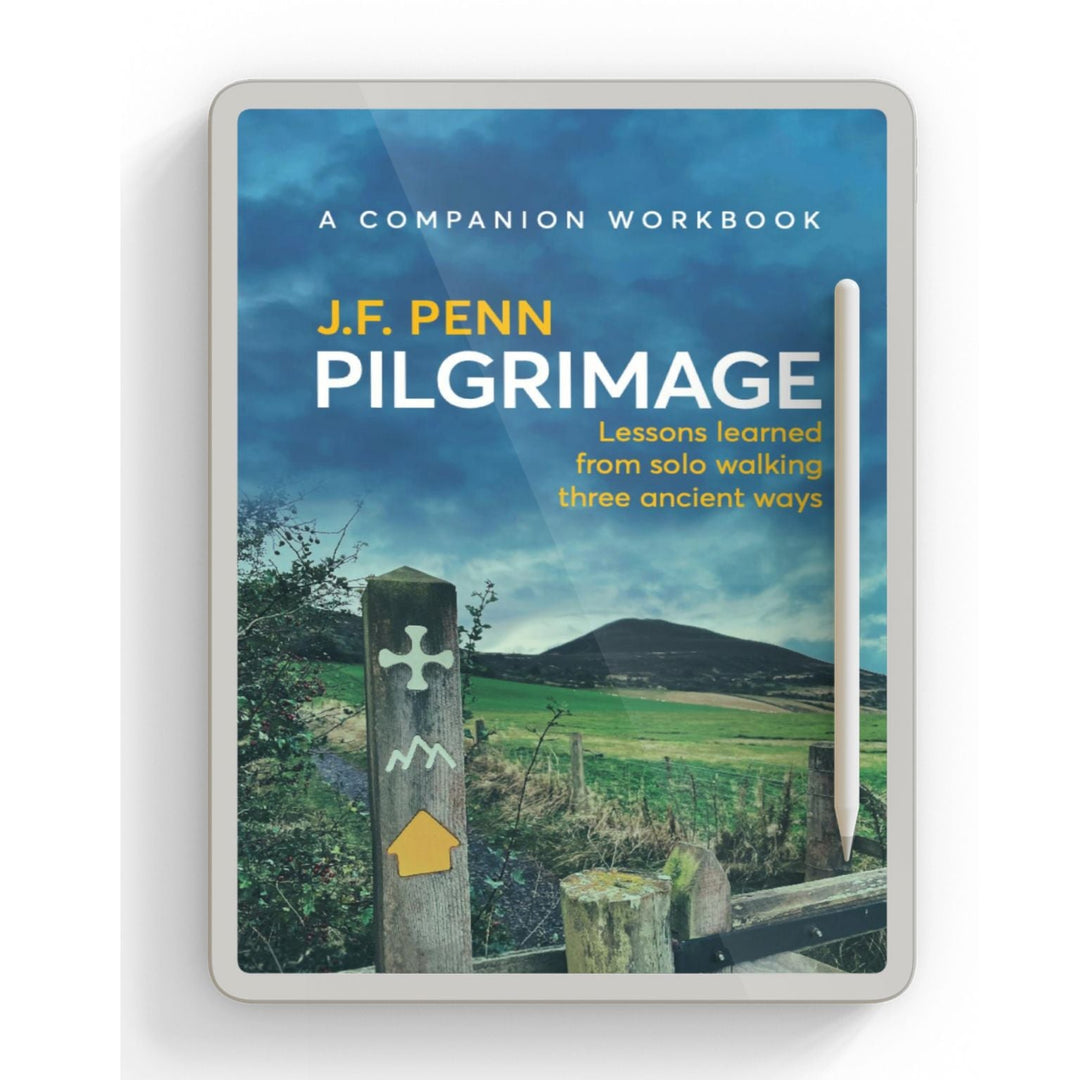


Pilgrimage: Facing the challenge
“A journey without challenge has no meaning; one without purpose has no soul.”
—Phil Cousineau, The Art of Pilgrimage
I woke up on the eighth day of my Camino in the village of Oia, Spain. A hurricane had blown through the night before, cutting power to the area as I lay in bed listening to the violence of the storm. It was still dark and rain pounded down outside.
As I taped my feet and plastered my blisters, I wondered what the hell I was doing. I did not want to walk out into the storm, especially when every step was painful. I still had seven more days of walking to get to Santiago de Compostela, and given the state of my feet, it would only get harder.
But pilgrimage is not a holiday.
It is meant to be a challenge — and part of the challenge is not giving up.
A long-distance walk is a test of stamina. Each day might be manageable and nothing too challenging if it were the only one, but repeating the challenge day after day — especially on the cobblestones of the Portuguese route — compounds the fatigue and pain.
Practically, it’s easy to give up on the Camino, as you can call a taxi at most accommodations and other places along the route each day. Many pilgrims choose to skip a stage and take transport to their next hotel, so the temptation is always there — and if you truly need help, then, of course, you must take it.
But I know the difference between the ‘normal’ pain of long-distance walking and acute ‘something is definitely wrong’ pain.
At times like these, when the struggle is more mental than physical, I write in my journal. Some might pray, but I find solace and answers in writing.
I moan a lot and list all the places that hurt and why I want to stop and give up and go home. Then I write about why I am walking and why I should continue. I know this pain is temporary and it will fade, but the pride in finishing will be mine for the rest of my life.
I write my affirmations over and over again: I am strong. I can do hard things. I will finish.
That morning in Oia, I drank my coffee, put on my rain gear, and headed out into the storm.
* * *
Pilgrimage proves you can do difficult things, and that knowledge will help you when you return to your daily life. If you can figure out the challenges along the way, be resilient, and make it to your destination, you prove your strength to yourself. I needed that at a time of turmoil in my life when, most days, I felt weak and broken in so many ways.
There are three stages of pilgrimage that require different aspects of determination.
Starting energy
You need starting energy to plan and organise your trip, to turn it from a long-held dream or a goal into reality. You need to overcome obstacles and fears to get even as far as the starting point, and many people fall at this first hurdle.
You need to book time away from your normal life and, since most of the Camino routes are a physical challenge, you also need to train in preparation, which takes more time.
I’d been wanting to walk the Camino for more than twenty years, and I only found my starting energy when the pandemic put the brevity of life into perspective. I know how it feels to say ‘some day,’ but that day will never come unless you make a decision, book a route and transport to get there, and commit to your pilgrimage.
Pushing-through energy
Once you begin your pilgrimage, you need pushing-through energy, especially on the days when you’re tired and in pain and emotionally broken and you just want to give up, like that morning in Oia for me.
You will need it when the weather is wild and stormy, or too hot and the sun beats down upon you. You will need it when your feet hurt and your pack is too heavy and there are still days to go until you finish. You will need it when you are bored with the monotony of seemingly endless walking. You will need it when you get annoyed with other pilgrims, and when you wonder why you are bothering to do this, anyway.
You will need this pushing-through energy in so many situations, but somehow you will keep putting one foot after the next until that final step when you arrive at your destination.
Finishing energy
You need finishing energy to return home and reflect on the experience, to bring the lessons of pilgrimage to the rest of your life.
It’s easy to arrive home, put your pack away and your clothes in the wash, then dive back into the inevitable life admin and everything you’ve missed.
By the time your blisters have healed, you may have already forgotten the lessons of the Way, and finishing energy is needed to find the gold and incorporate it into your life.
It might be re-reading your journal, or going through your photos and printing those that resonate. It might be taking action on a decision you made on your walk.
Don’t just slip back into life as if nothing has changed. The gifts of pilgrimage take time to emerge, so allow space for them to filter through.
Questions:
• Do you have starting energy? If not, how can you find it?
• Are you ready to commit to your pilgrimage?
• How will you develop pushing-through energy? Are there ways you can start practicing it in your daily life?
• If you are planning your pilgrimage, how can you make space for finishing energy on your return?
Resources:
• The Art of Pilgrimage: The Seeker’s Guide to Making Travel Sacred — Phil Cousineau